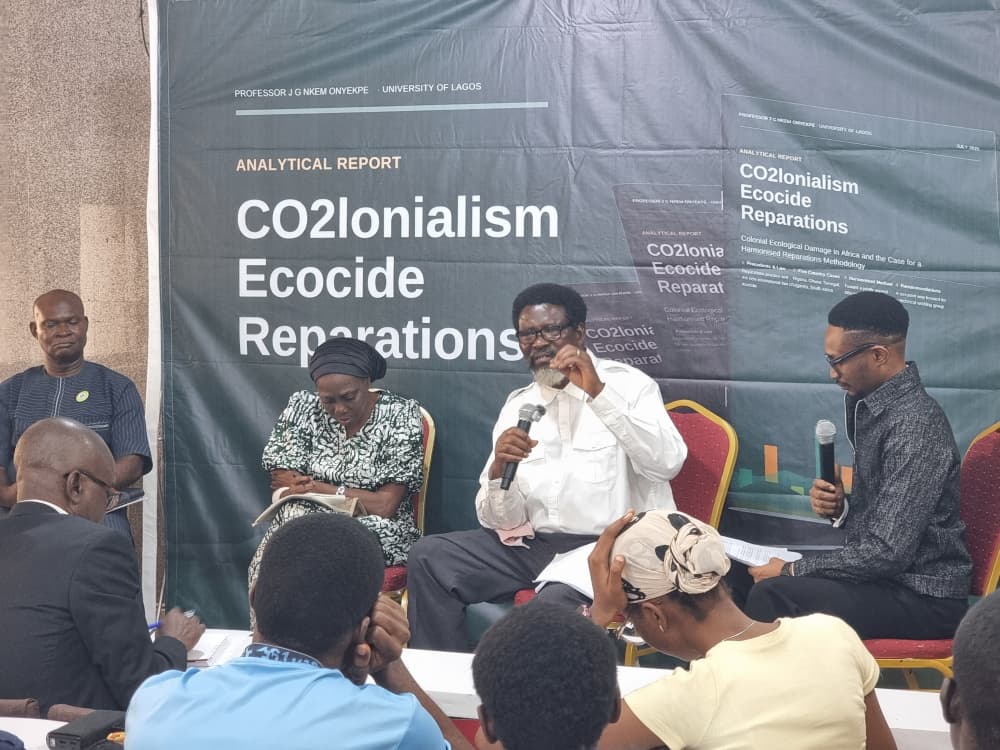


LAGOS, NIGERIA – August 28, 2026 – A groundbreaking analytical report titled “CO2lonialism-Ecocide-Reparations” was unveiled today at the University of Lagos, presenting a new and potentially monumental dimension to Africa’s reparations agenda. The report argues that the long-lasting ecological harm caused by British colonial rule on its former African colonies constitutes a separate and vast category of damage, distinct from the humanitarian harm of the slave trade, with a valuation that could exceed hundreds of trillions of dollars.
The report’s lead author, Professor J. G. Nkem Onyekpe, PhD, Head of the Department of History and Strategic Studies at the University of Lagos, presented the findings to a distinguished audience of academics, legal experts, and public activists. The core argument is that while direct historical harms are significant, the systematic and structural appropriation of resources, land, and energy under colonialism has created a devastating ecological debt that demands rigorous monetary valuation.
"The report documents that valuation exercises of comparable ambition and scale have already been attempted successfully," stated Prof. Onyekpe. He cited a peer-reviewed 2022 estimate that valued resources appropriated from the global South through unequal exchange at over $10 trillion per year in 2015 alone. "If the same order of logic—that large-scale, structurally unequal appropriation of resources is capable of rigorous monetary valuation—were extended backward across the full duration of colonial rule and across the full set of affected African states, the resulting figure would run into the hundreds of trillions of dollars, and quite possibly beyond."
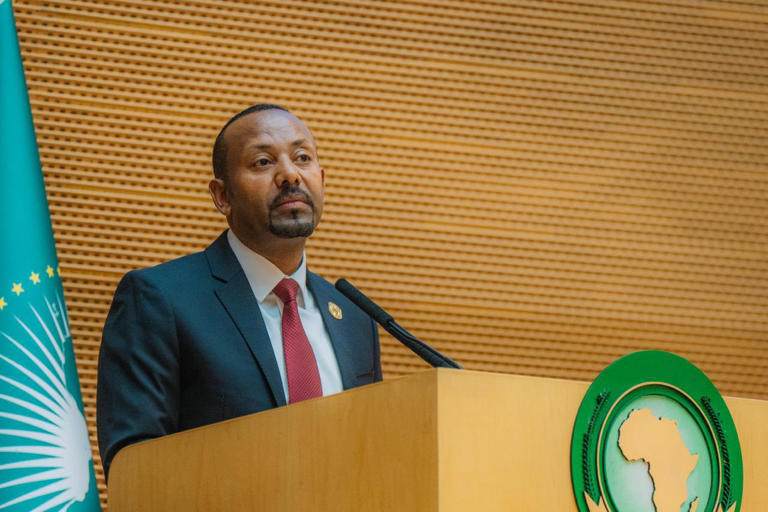
The report is set to be formally submitted to the African Union’s newly established sub-commissions—the Committee of Experts on Reparations (AUCER) and the Legal Reference Group on Reparations (AULER). These bodies, now operational under the AU’s Decade of Justice and Reparations (2026-2035), are tasked with developing a harmonized methodology for evaluating and advancing a common African position on reparations claims .
The implications of incorporating ecological destruction into the reparations framework are enormous, according to Nigerian public activists attending the launch. They argue that if a rigorous, continent-wide valuation methodology is adopted, the $5 trillion figure publicly demanded by Senator Ned Nwoko will now become insufficient. Senator Nwoko had previously submitted a formal claim to the British government demanding at least $5 trillion in reparations from Britain’s colonial system and other colonial powers .
The legal and institutional environment for such claims has shifted markedly since 2021, creating a unique window for advancing an African-led claim. Key developments include the adoption of a working legal definition of ecocide by the Independent Expert Panel, followed by binding or soon-to-be-binding instruments at the Council of Europe (2025) and the European Union (2024), and a proposal before the International Criminal Court . Most critically, the African Union’s own decision in July 2025 to establish an ad hoc committee to examine the classification of “massive destruction of environmental ecosystems” as a crime provides direct institutional support for the report’s premise .
The report also documents a directly on-point international legal precedent: the 1990s Certain Phosphate Lands in Nauru case before the International Court of Justice. In that case, a formerly colonised state successfully brought a claim against its former colonial administrator (Australia) specifically for environmental devastation caused by colonial-era phosphate mining . This landmark ruling provides a template, however imperfect, for what an African claim of this kind might look like in practice.
“The Nauru case proves that such claims are not merely theoretical but are grounded in established international law,” remarked Dr. Karibi-Whyte a Jurispudence and International law expert. “Africa is now building on that precedent to address a harm that is orders of magnitude larger.”
The launch comes at a pivotal moment for the reparations movement, with the African Union having declared 2025 as the Year of Reparations and formally established the AUCER and AULER mechanisms to guide the continent’s strategy . This new report is expected to be a critical document for their work, framing environmental repair as an essential element of restorative justice for the continent.
ABOUT THE REPORT
“CO2lonialism-Ecocide-Reparations” was produced by a team of researchers at the University of Lagos and will be formally transmitted to the African Union’s AUCER and AULER commissions for consideration in their ongoing work on reparations claims.